Ready to take your small business to the next level? Then buckle up, because understanding commercial insurance is like strapping on a safety belt for your entrepreneurial journey. Imagine steering your business with the confidence that you’re prepared for whatever comes your way. That’s the power of the right insurance.
In this guide, we’ll unravel the complexities of small business insurance, focusing on three essential types that can make or break your commercial success. From legal requirements to emerging trends, we’ve got you covered with insights that will help you navigate the insurance landscape like a pro.
Types of Small Business Insurance
Did you know that 40% of small businesses never reopen after a disaster? That’s why understanding different types of insurance is crucial. Let’s dive into the essentials you need to protect your business.
Small business insurance is not a one-size-fits-all situation. Different industries have different needs, and missing out on the right coverage can be catastrophic. Here is the deal: by knowing what policies exist and which ones suit your business, you can ensure your business is covered from all angles.
General Liability Insurance
Every small business should consider General Liability Insurance first. It covers legal hassles due to accidents, injuries, and claims of negligence. For example, if you run a retail store, this policy could protect you from slip-and-fall lawsuits, which are more common than you think.
But General Liability isn’t enough for everyone. Let’s look at more specific options.
Professional Liability Insurance
Professional services can’t skip on Professional Liability Insurance, also known as Errors and Omissions (E&O) insurance. This is essential if your business offers expert advice, like consulting or legal services. It covers negligence and mistakes that could happen during business operations.
Pro Tip: Even if you’re perfect, clients can still sue. Protect your business with E&O insurance!
Industry-Specific Insurance Needs
Some industries need specialized coverage. For instance, a construction business might require Builder’s Risk Insurance to protect on-site structures. Meanwhile, restaurants should look into Liquor Liability Insurance if they serve alcohol. Each industry has its nuances, and insurance should reflect that.
Comprehensive Coverage
Having multiple types of insurance isn’t just smart; it’s necessary. By combining policies, you create a safety net that keeps your business operational, no matter what hits. Imagine pairing General Liability with Cyber Liability Insurance. You’re covered for both physical accidents and data breaches, a common threat in today’s digital age.
| Insurance Type | Purpose | Industry Relevance | Key Benefits |
|---|---|---|---|
| General Liability | Protect against accidents and lawsuits | Retail, Hospitality | Covers legal fees, settlements |
| Professional Liability | Guard against negligence claims | Consulting, Law | Protects against client lawsuits |
| Builder’s Risk | Insures buildings under construction | Construction | Covers damage to on-site structures |
| Liquor Liability | Covers alcohol-related incidents | Restaurants, Bars | Protects against alcohol-related claims |
| Cyber Liability | Protects against data breaches | Any business with digital presence | Covers legal fees, recovery costs |
Understanding Commercial Insurance Requirements
Did you know that nearly 40% of small businesses face fines and shutdowns due to improper insurance? Yes, it’s that serious. So, understanding the commercial insurance requirements is a must.
Many regions have specific legal requirements that small businesses must adhere to. Failing to comply can lead to hefty penalties. But here’s the deal: knowing these requirements allows you to operate smoothly without the constant fear of legal repercussions.
Legal Requirements for Small Business Insurance in Various Regions
The rules for commercial insurance can vary significantly from one region to another. In most places, having liability insurance is non-negotiable. This covers any legal damages for incidents involving customers or property. However, some areas might require additional coverage like worker’s compensation or product liability depending on your business nature.
When is Commercial Insurance Necessary?
Think of insurance like a safety net for your business. Even if you’re running a small online shop, some risks are unavoidable. For example, if you’re leasing office space, your landlord might mandate specific insurance coverage. And if you’re dealing with customers face-to-face, having sufficient liability coverage is crucial.
Comparing Requirements Across Industries and Business Sizes
Insurance needs aren’t one-size-fits-all. A tech startup will have very different requirements compared to a local bakery. Here’s a quick comparison:
| Industry | Common Insurance Types |
|---|---|
| Retail | General Liability, Property Insurance |
| Construction | Contractor’s Liability, Builder’s Risk |
| Consulting | Professional Liability, Cyber Insurance |
Insurance requirements can shape the way a business operates, influencing decisions from hiring to expansion.
Pro Tip: Always consult with a local insurance expert to ensure you’re not missing out on any region-specific requirements.
Benefits of Comprehensive Insurance Coverage

Ever wondered what stands between your small business and a financial disaster? It’s comprehensive insurance coverage. Let’s dive into why having this coverage could be your biggest business asset.
A staggering 40% of small businesses never reopen after a disaster. Comprehensive insurance not only provides financial protection but can be the deciding factor in your business’s survival.
Financial Protection Offered by Comprehensive Coverage
Comprehensive insurance covers various risks and potential liabilities that could otherwise cripple your business. Imagine a scenario where your main office suffers fire damage. Without insurance, the cost of repairs could be unbearable, but with comprehensive coverage, you’re financially shielded.
Real-World Examples of Benefiting Businesses
Consider a bakery that experienced a break-in with significant equipment damage. Fortunately, their insurance policy covered all replacement costs, allowing them to bounce back in days, not months. Here is the deal: having the right coverage can transform a devastating event into a manageable inconvenience.
Enhancing Business Credibility
Did you know that having comprehensive insurance can actually boost your business credibility? Clients and partners often view insured businesses as more reliable. This trust factor can lead to more contracts and better client relationships. It’s a simple yet powerful way to enhance your market presence.
| Benefit Type | Description | Example Business Case | Outcome |
|---|---|---|---|
| Financial Protection | Covers potential liabilities and risks | Office fire damage | Costs covered, business continuity maintained |
| Business Continuity | Ensures quick recovery post-disaster | Bakery theft | Replacement costs covered, rapid reopening |
| Credibility | Enhances trust with clients and partners | Service provider with insurance | Increased client retention and contracts |
Pro Tip: Ensure your policy covers both common and industry-specific risks to maximize protection.
Cost Factors and Budgeting for Insurance
Think your business insurance costs are sky-high? You’re not alone. Many small businesses struggle with understanding what drives their premiums.
Here’s the deal: The cost of insurance isn’t just a random number. It’s determined by several critical factors that you can actually influence. Understanding these can help you budget smarter and save money without sacrificing coverage.
Key Factors Influencing Insurance Premiums
You might be surprised to learn that the size of your business plays a huge role in your insurance costs. Larger businesses often face higher premiums due to increased risk exposure. But that’s not all. Your industry type and location are also major players. For instance, a technology firm in a bustling city might have different rates compared to a rural retail shop.
Strategies for Budgeting and Managing Insurance Expenses
Budgeting for insurance doesn’t have to be a headache. Start by reviewing your current policies annually. This way, you can adjust coverage to fit your evolving needs. Also, consider bundling different types of insurance. Often, insurers offer discounts for package deals.
- Analyze your risk exposure annually.
- Regularly compare different insurer offers.
- Invest in safety measures to lower premiums.
Methods for Reducing Insurance Costs Without Compromising Coverage
Want to cut costs but worried about losing coverage? Increasing your deductible can lower your premium significantly. But this strategy works best if you have the cash reserves to cover a higher deductible in case of a claim. You can also negotiate for loyalty discounts if you’ve been with the same insurer for a while.
Pro Tip: Review your claims history. A clean record can often lead to reduced premiums.
Comparison of Typical Costs Versus Benefits for Small Businesses
Check out this comparison chart showing typical costs versus benefits. It highlights how different coverages stack up against their average prices, helping you make informed decisions.
| Type of Coverage | Average Cost (Annual) | Potential Coverage Benefits |
|---|---|---|
| General Liability | $500 – $1,500 | Protects against bodily injury and property damage. |
| Property Insurance | $1,000 – $3,000 | Covers damage to your business property. |
| Workers’ Compensation | $2,000 – $5,000 | Provides coverage for employee injuries. |
Common Challenges in Selecting Business Insurance
Did you know that over 40% of small businesses are underinsured? That’s right. Many owners struggle with choosing the right coverage.
Finding the perfect insurance is like searching for a needle in a haystack. The choices are overwhelming, the jargon is confusing, and the stakes are high. BUT, if you know the common pitfalls, you can make smarter choices.
Overcoming the Complexity of Insurance Jargon
When was the last time you understood every word in an insurance policy? Probably never. Small businesses frequently get tripped up by complex terminology. Here is the deal: You don’t need a law degree to figure this out. Focus on the basics like liability, property, and employee protection.
Pro Tip: Always ask your insurance agent to explain terms in plain English. If they can’t, find someone who will.
Evaluating Coverage Options Effectively
You’ve got limited time, and the clock is ticking. How do you choose between dozens of policies? Start by jotting down your business risks.
- Identify potential liabilities and property risks.
- Consider industry-specific coverages.
- Weigh the pros and cons of each policy.
Understanding Cost vs. Coverage
Budget constraints are real. Many small businesses think the cheapest policy will do the trick. And that’s where they go wrong!
Solution: Instead of looking at the premium alone, consider the coverage limits and deductibles. Cheap today could be costly tomorrow.
Avoiding Common Pitfalls
Missed a crucial detail in your policy? You’re not alone. Here’s how to sidestep common errors:
Step #1: Review your policy annually.
Step #2: Adjust coverage as your business evolves.
Step #3: Consult with a specialized business insurance broker.
By following these strategies, you’ll sidestep those pitfalls and make informed decisions.
Future Trends in Small Business Insurance
Did you know that 60% of small businesses are underinsured? This is just the tip of the iceberg. The insurance landscape is changing rapidly, and you need to keep up to protect your business.
With technology advancing at a breakneck pace, small business insurance is evolving too. New products and services are available that make it easier for you to get the coverage you need. Here’s the deal: staying ahead of these trends can be the difference between thriving and barely surviving.
Emerging Trends in Small Business Insurance
One major trend is the shift towards digital-first insurance solutions. Insurtech companies are revolutionizing the industry with AI-driven analytics, making it easier than ever to tailor policies to your specific needs. Imagine getting a custom insurance quote in minutes, not days.
Another trend? The rise of cyber insurance. As cyber threats become more sophisticated, having a policy that protects against data breaches and other cyber risks is crucial. Pro Tip: Don’t wait until after a cyberattack to get coverage. Be proactive and secure a policy now.
Predictions on How Insurance Needs May Evolve
With the integration of IoT devices in business operations, expect insurance policies to cover these assets. More connectivity means more data, and more data means more potential vulnerabilities. But, with the right coverage, you can mitigate these risks effectively.
Also, expect policies to evolve to cover remote work risks. With more employees working from home, new challenges like liability and data protection arise. Insurers are developing products specifically designed for these modern work environments.
New Insurance Products for the Modern Business Landscape
One exciting development is the introduction of pay-as-you-go insurance. This allows you to adjust your coverage based on real-time business needs, potentially saving you money. If your business slows down, your insurance costs can too.
Another is the growth of parametric insurance. Unlike traditional insurance, payouts are automatically triggered by specific parameters, like weather events or flight delays, reducing the claims process hassle. This can be a lifesaver for businesses frequently impacted by such events.
Trends, Potential Impacts, and Preparations
| Trend | Potential Impact | How to Prepare |
|---|---|---|
| Digital-First Solutions | Faster, more personalized service | Adopt digital platforms and stay informed on tech updates |
| Cyber Insurance | Protection against data breaches | Invest in cybersecurity measures and get coverage early |
| Pay-As-You-Go Policies | Flexible premiums based on usage | Monitor business needs regularly and adjust coverage |
| Parametric Insurance | Quicker claim processes | Identify key risk parameters and secure relevant policies |
Final Thoughts
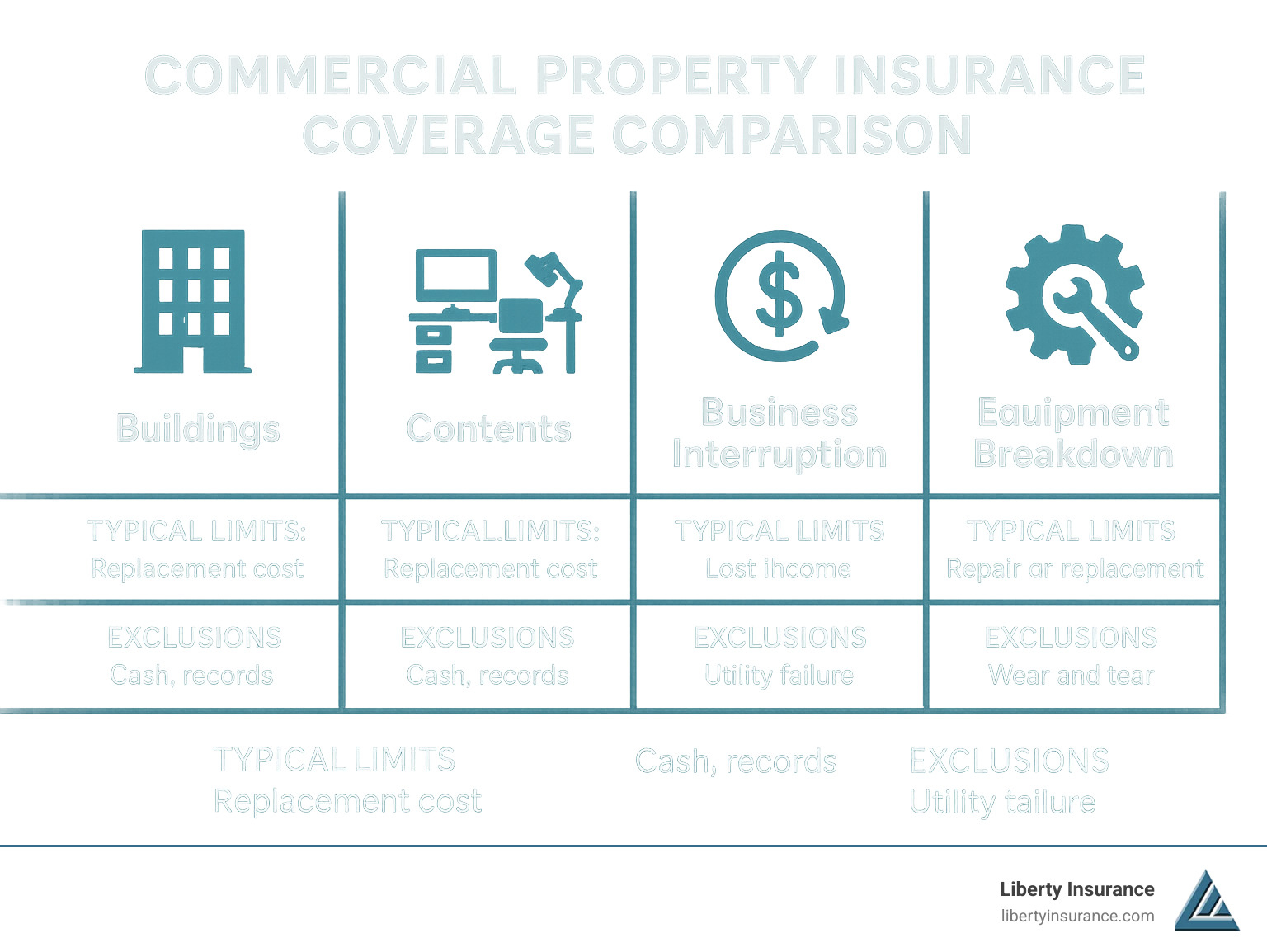
As we wrap up this insurance expedition, remember: the right insurance isn’t just a safeguard—it’s your secret weapon in the business world. By staying informed and proactive, you can not only protect but also empower your business. So, go forth and conquer the business realm with the confidence that your insurance strategy is rock solid.
Q&A
What are the three main types of commercial insurance for small businesses?
The three main types are General Liability Insurance, Property Insurance, and Workers’ Compensation Insurance.
Why do small businesses need multiple types of insurance?
Having multiple insurance types ensures comprehensive coverage, protecting against different risks and potential liabilities.
How can small businesses determine their insurance needs?
Analyze your industry, evaluate potential risks, and consult with an insurance expert to tailor your coverage.
What factors affect the cost of small business insurance?
Factors include the type of industry, business size, location, and coverage limits.
How can businesses reduce insurance costs without sacrificing coverage?
Consider bundling policies, maintaining a safe workplace, and regularly reviewing and adjusting coverage to match your needs.
Are there legal requirements for small business insurance?
Yes, the requirements vary by region and industry, often mandating specific coverages like workers’ compensation.
What trends are shaping the future of small business insurance?
Emerging trends include digital-first policies, customization options, and usage-based insurance models.
