Hey there, curious driver! Ever wondered what really goes into determining your auto insurance rates in Massachusetts? You’re not alone. Whether you’re a seasoned road warrior or a new driver just hitting the streets, understanding the ins and outs of auto insurance is essential. We’ve got you covered with the latest insights and tips to help you navigate the world of auto insurance like a pro.
Dive in with us as we explore the fascinating factors that affect your rates, the average costs, and the types of coverage available. We’ll also share some savvy strategies to save on premiums and introduce you to top-notch providers in the state. Buckle up—it’s going to be an enlightening ride!
Factors Affecting Auto Insurance Rates in Massachusetts
Did you know that your car insurance premium might be higher simply because of where you live or how often you drive? In Massachusetts, several factors can make or break your auto insurance rate. Let’s dive into the specifics.
Understanding these factors can help you navigate the complex world of car insurance. From your age to your driving record, every detail counts.
Demographic and Personal Factors
Your age plays a huge role in determining car insurance rates. Why? Younger drivers typically pay more because they’re considered riskier. On the flip side, older, more experienced drivers often enjoy lower rates.
- Teens: Expect sky-high premiums.
- 25-65: The sweet spot for lower rates.
- Seniors: Rates might rise again due to increased risk.
Location, Location, Location
Where you live in Massachusetts can significantly impact your insurance costs. Urban areas often mean higher rates due to increased traffic and accident likelihood.
- Boston: Expect higher premiums.
- Suburbs: Typically more affordable.
- Rural areas: Lowest premiums but fewer providers.
Driving Record and Claims History
Your driving history is like your credit score for insurers. A clean driving record means cheaper insurance, while accidents and violations can drive premiums through the roof.
- No claims: Enjoy substantial discounts.
- One accident: Rates might increase slightly.
- Multiple violations: Prepare for hefty premiums.
Vehicle Type and Usage
The car you drive and how you use it are also crucial. Sports cars or luxury vehicles usually cost more to insure due to higher repair costs and theft risk.
- Luxury/Sports cars: Higher premiums.
- Family sedans: Generally more affordable.
- Annual mileage: More miles mean higher rates.
Impact of State Regulations
Changes in state laws can have a ripple effect on your premiums. For instance, Massachusetts’ recent adjustments to minimum coverage requirements could mean different rates for many policyholders.
Pro Tip: Stay updated on state regulations to anticipate changes in your insurance costs.
Average Cost of Auto Insurance in Massachusetts
Ever wonder how much you’ll shell out for auto insurance in Massachusetts? The truth might shock you. While the national average hovers around $1,674 per year, Massachusetts drivers typically pay about $1,223 annually.
But not everyone’s paying the same rate. Factors like age and vehicle type can cause your rate to skyrocket—or plummet. Let’s break it down so you know exactly what to expect.
Insurance Costs by Age and Vehicle Type
Insurance companies love to dive deep into details. They check everything from your age to the car you drive. Here’s what the average costs look like:
| Age Group | Sedan | SUV | Truck |
|---|---|---|---|
| 18-24 | $2,800 | $3,100 | $3,400 |
| 25-34 | $1,500 | $1,700 | $1,900 |
| 35-44 | $1,200 | $1,400 | $1,600 |
| 45-54 | $1,150 | $1,300 | $1,500 |
| 55+ | $1,000 | $1,200 | $1,400 |
As you can see, younger drivers get hit with higher costs. This is because insurers view them as high-risk. BUT here’s the deal: as you age, your premiums tend to drop!
Urban vs. Rural Area Costs
Location, location, location! It’s not just important in real estate. Where you live in Massachusetts can dramatically affect your insurance premium. Urban areas like Boston typically have higher rates due to increased traffic and accident likelihood.
- Boston: $1,600
- Worcester: $1,400
- Springfield: $1,300
- Cape Cod (Barnstable County): $1,100
- Berkshires (Pittsfield): $950
Notice the difference? Urban drivers pay more than their rural counterparts. This isn’t just a coincidence; it’s a trend.
Pro Tip: If you’re living in a high-cost area, consider taking a defensive driving course. It could knock off some dollars from your premium!
City-Specific Insurance Costs
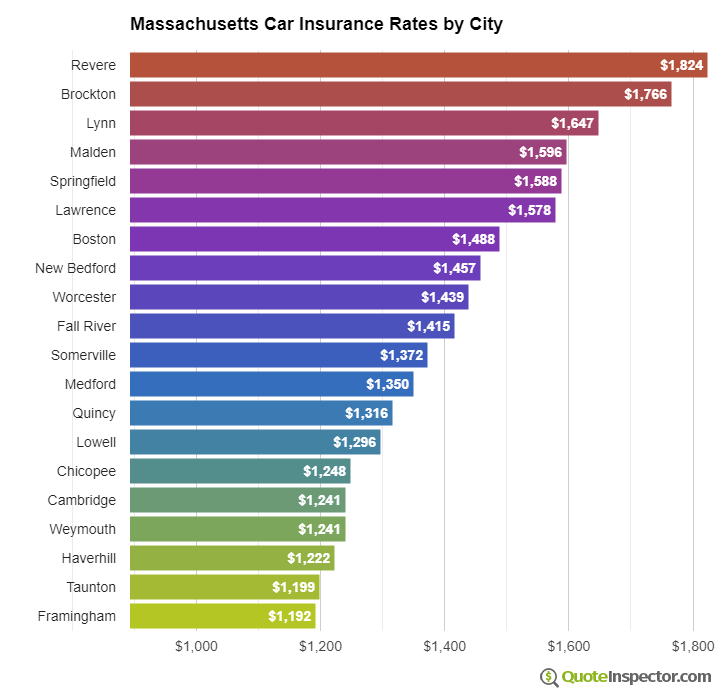
Curious about how costs vary across different cities in Massachusetts? Recent studies show a wide range of insurance costs. Cities like Lowell and Cambridge tend to have rates slightly lower than Boston, but not by much. Meanwhile, smaller towns offer a reprieve with significantly lower rates.
Types of Auto Insurance Coverage Available in Massachusetts
Ever wondered what types of auto insurance coverage you can get in Massachusetts? There are quite a few, and each one can protect you in different ways.
When you’re driving in Massachusetts, having the right auto insurance is crucial. The state requires drivers to carry certain types of coverage, but there’s also a range of optional policies that can offer added protection.
Understanding Mandatory and Optional Coverage
Let’s start with what’s required. In Massachusetts, you must have:
- Bodily Injury to Others: This covers medical expenses and lawsuits from people injured in an accident you caused.
- Personal Injury Protection (PIP): It covers your medical bills, regardless of who was at fault.
- Bodily Injury Caused by an Uninsured Auto: Protects you if an uninsured driver hits you.
- Damage to Someone Else’s Property: This pays for damages you cause to another person’s property.
But here’s the deal: optional coverage can make a huge difference. Consider these:
- Collision Coverage: This helps pay for your car repairs after an accident, regardless of who’s at fault.
- Comprehensive Coverage: Covers non-collision incidents like theft or natural disasters.
- Underinsured Motorist Coverage: Protects you if another driver is at fault but doesn’t have enough insurance.
Comparing Coverage Types: Benefits and Limitations
Not sure which coverage is right for you? Check this out.
| Coverage Type | Benefits | Limitations |
|---|---|---|
| Bodily Injury to Others | Protects against lawsuits and covers medical expenses for others | Does not cover your medical expenses or damages to your own car |
| Collision Coverage | Covers your car repairs after an accident | Usually involves a deductible; does not cover non-collision incidents |
| Comprehensive Coverage | Covers theft, vandalism, and natural disasters | Also involves a deductible; generally more expensive |
Pro Tip: Even if it’s not required, consider adding comprehensive and collision coverage for broader protection.
So, should you stick with just the basics? Or are you ready to beef up your policy with optional coverages that fit your needs?
Strategies to Reduce Auto Insurance Costs
Did you know the average American spends over $1,600 annually on car insurance? If you’re shelling out a small fortune every year, it’s time to find ways to cut those costs. Lucky for us, Massachusetts drivers have several tricks up their sleeves!
Insurance rates might seem set in stone, but they’re not. They can be molded, shaped, and ultimately reduced if you know what you’re doing. Let’s dive into some effective strategies to lower those pesky premiums.
Implementing Cost-Saving Methods
Here’s the deal: you can significantly slash your auto insurance costs with a few smart moves. Here’s a step-by-step guide:
- Shop Around: Get quotes from at least 3-4 different insurers. Rates vary, so you might find a better deal just by asking.
- Bundle Policies: Combine your auto insurance with your home or renters insurance. This can lead to hefty discounts.
- Increase Deductibles: Opt for a higher deductible to lower your premium. Just ensure you can afford the out-of-pocket expense if needed.
- Maintain a Clean Driving Record: Good driving habits lead to lower rates. Avoid accidents and traffic violations.
- Look for Discounts: Many insurers offer discounts for things like safe driving, being a good student, or installing anti-theft devices.
Pro Tip: “A clean driving record can save you up to 30% on your insurance premium. It’s like getting a discount for being responsible!”
The Impact of Discounts and Bundling
Massachusetts drivers can unlock significant savings through discounts and bundling. Insurers love bundling because it means more business for them, and they’re willing to give you a break on rates. Here’s what you need to know:
| Strategy | Potential Savings |
|---|---|
| Policy Bundling | 5% – 25% |
| Good Driver Discount | 10% – 30% |
| Anti-Theft Device Discount | 5% – 15% |
Bundling isn’t just about convenience; it’s about leveraging your relationship with an insurer for better rates. But remember, not all discounts are advertised. It pays to ask!
Insurance Providers in Massachusetts
Ever wondered which auto insurance companies are the best in Massachusetts? You’re not alone. Choosing the right provider can save you hundreds of dollars every year!
Let’s explore some top picks and see how they stack up against each other when it comes to features, pricing, and customer satisfaction.
Top Auto Insurance Providers in Massachusetts
Here’s a quick comparison of the leading auto insurance providers in Massachusetts:
| Provider | Annual Average Rate | Key Features |
|---|---|---|
| GEICO | $1,200 | Discounts for federal employees, military personnel, and good drivers. |
| Progressive | $1,350 | Snapshot usage-based program, multi-policy discounts. |
| State Farm | $1,400 | Excellent customer service, robust mobile app for claims and payments. |
| Liberty Mutual | $1,500 | Customizable coverage options, accident forgiveness. |
Benefits and Unique Features of Each Provider
Each provider brings something unique to the table. GEICO is known for its competitive rates and discounts, making it a great choice if you want to save some cash. Progressive offers a cutting-edge Snapshot program, which can tailor your rates based on your driving habits.
State Farm is often praised for its top-notch customer service and user-friendly mobile app, ensuring that your needs are met without any hassle. Meanwhile, Liberty Mutual stands out with customizable policies and features like accident forgiveness, which can be a lifesaver after a fender bender.
Customer Experiences
“Switching to GEICO saved me $300 a year, and their customer support is stellar. They even helped me find ways to lower my rate further!” – Satisfied GEICO Customer
“Progressive’s Snapshot program was a game-changer for me. It was amazing to see my premium decrease just because I practice safe driving habits!” – Happy Progressive Client
When it comes to choosing your auto insurance provider, these testimonials speak volumes. They’re not just about saving money; they’re about finding an insurer that understands your needs and rewards your responsible actions.
Legal Requirements for Auto Insurance in Massachusetts
Did you know that driving without insurance in Massachusetts could cost you big time? If you’re planning to hit the road, you’ve got to know what the state demands.
Massachusetts has strict auto insurance requirements. To keep your wheels turning legally, you need to meet the state’s minimum coverage standards. But what exactly does that entail?
Minimum Coverage Limits Required by State Law
In Massachusetts, it’s not just about having insurance; it’s about having the right coverage. Here’s what you need:
| COVERAGE TYPE | MINIMUM REQUIREMENT |
|---|---|
| Liability for Bodily Injury (Per Person) | $20,000 |
| Liability for Bodily Injury (Per Accident) | $40,000 |
| Property Damage Liability | $5,000 |
| Personal Injury Protection (PIP) | $8,000 |
| Bodily Injury Caused by an Uninsured Auto (Per Person) | $20,000 |
| Bodily Injury Caused by an Uninsured Auto (Per Accident) | $40,000 |
Penalties for Non-Compliance
Here’s the deal: ignoring these requirements isn’t just risky—it’s costly. If you’re caught without insurance, you could face fines, suspension of your driver’s license, and even potential jail time. Plus, your vehicle registration could be revoked until you prove you’ve got coverage.
Pro Tip: Keep your insurance card handy. It’s your proof that you’re compliant with state laws and can save you big headaches if you’re ever pulled over.
Final Summary
And there you have it—a deep dive into the world of auto insurance in Massachusetts. Armed with this knowledge, you’re now better equipped to make informed decisions and possibly save some cash along the way. Remember, the key to securing the best rates lies in understanding the factors at play and leveraging discounts where possible. Safe driving!
Frequently Asked Questions
What are the main factors affecting auto insurance rates in Massachusetts?
Age, location, driving history, vehicle type, and coverage level are key factors influencing rates.
How do auto insurance costs vary between urban and rural areas?
Urban areas tend to have higher insurance costs due to increased traffic and accident rates compared to rural locations.
What is the average cost of auto insurance for young drivers in Massachusetts?
Young drivers often face higher premiums, with average costs ranging from $2,000 to $4,000 annually.
Which types of auto insurance coverage are mandatory in Massachusetts?
Massachusetts law requires drivers to have Bodily Injury Liability and Property Damage Liability coverage.
Are there strategies to reduce my auto insurance costs?
Yes, consider bundling policies, maintaining a clean driving record, and taking advantage of discounts.
